

You could recite the K53 book by heart when you received the coveted learner’s licence. However, getting in the seat of a car for the first time and actually learning the practicalities of driving is a completely different story! It’s going to take a lot of stalls in the middle of the road, high revs as you learn clutch control and annoying hoots from fellow drivers before you can steer away calmly with a driver’s licence and enjoy your first real taste of freedom.
But, before you do that, you (or your parents) need to buy a car to learn to drive in – a car that best fits this stage of your life.
Here are some top tips to find the ideal learner driver car:
#1 Buy affordable
Finding the perfect car to drive off into the sunset is sometimes an idea stuck in the clouds. You need to come back down to earth and face reality. When you’re young, you have a small budget and can’t afford to buy the flashiest car on the block (and neither can most parents).
Going second-hand (as long as it’s reliable) is often a smart idea for this stage of your life. But if you’re going for a new car, rather opt for the cheapest model in the range of a trusted brand. For example, a Toyota Agya or Starlet is much more affordable than a Corolla or Rav4.

Choosing a cheaper car will also save you money on insurance (because premiums are already inflated for those under 25) and maintenance costs (which add up in the long term).
If your parents are funding your next ride, sometimes, the best way to do so is to sell a car. If your folks have got a not-so-reliable car, a large SUV or sedan or an impractical automatic, perhaps it’s time to sell up and use the cash to fund your new car. Don’t let them make a poor financial decision by trading in their old car or selling privately, but rather help them get the best cash price by selling on a reputable online platform.
#2 Buy small
Let’s face facts – one of the trickiest parts of a driver’s licence test is parallel parking. A zooty Kia Picanto or Hyundai Grand i10 is going to be a lot easier to parallel park than a Kia Sportage or Hyundai Tucson. That’s simply because of their size.

Your first car is likely to only last you a few years, so it’s not necessary to think about your 15-year plan to have a spouse and 4 kids when selecting your first ride. You’re probably looking at the next 5 years before you opt to sell your car and buy a new car when you land your first proper job. (So choose a model that is likely to hold its value relatively well.)
Opt for a compact ride that will be easier to navigate through narrow streets and busy traffic – especially when those factors can be stressful for any new driver.
#3 Buy manual
While driving an automatic is definitely easier, you don’t want to be constricted to only driving these cars for the rest of your life. Even if you don’t desire to drive a manual car in the long term, it’s better to learn the skill of driving a manual before relaxing behind the wheel of your dream automatic.
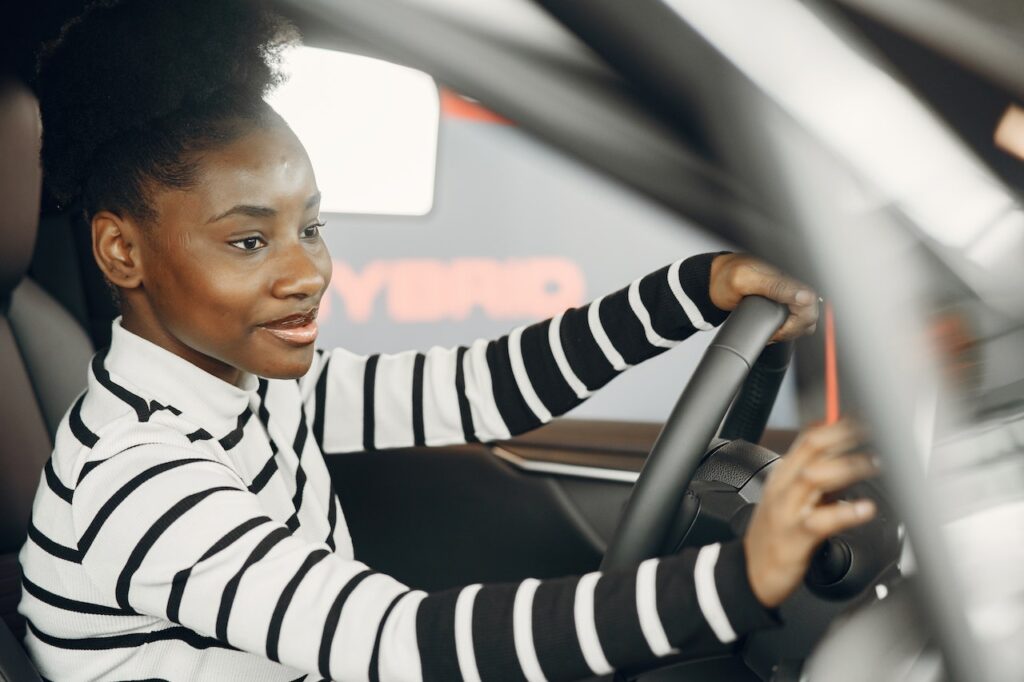
And in the event of an emergency, where only a manual car is available, it would be best for you to know how to drive this car for the safety of everyone.
Plus, if you buy a manual car, you will save money on fuel, initial cost at the dealership and ongoing maintenance.
#4 Buy safe
There’s a reason why insurers raise the premiums when they hear that there’s a young driver behind the wheel.
According to Arrive Alive, “Crashes involving alcohol, speeding and carrying of passengers are about 20 times more likely for teens than for middle-aged adults. Crashes occurring at night and involving both alcohol and passengers are about 9 times more likely.”

Your first car needs to be safe. Check that the vehicle has airbags in at least both front seats, ABS (anti-lock braking system) and Bluetooth for safe hands-free calls. Although buying a much older car may be more financially viable, an older Citi Golf will not come fitted with airbags (and this is not a feature you should pass up on).
Make sure that when you buy a second-hand car it still comes fitted with a spare wheel, tyre-changing kit and safety triangle – in case you’re stranded at the side of the road.
#5 Buy reliable
There’s nothing worse than just getting the hang of driving and then the engine packs up and you’re stuck in the middle of nowhere trying to call for help.
Do your due diligence and buy a trusted car brand with a solid reputation and not a skoro-skoro which has been passed down the family line for the last 20 years.
If you buy a skedonk of a car, the only thing you’ll save is money on the cash price of the car. Not time, not fuel costs and certainly not reliability.

Buying your first car is a daunting experience and an exciting ‘adulting’ milestone certainly worthy of a selfie. But buying responsibly is always your first priority and will stand you in good stead when ticking the safety, affordability and reliability boxes as well as when it comes to selling your car for the best cash price for the next stage of your life.
