
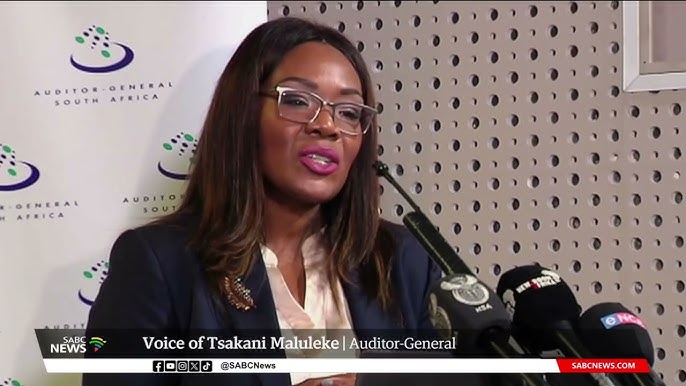
How can nearly R14 billion in financial irregularities become irrecoverable in government finances? This perplexing situation was presented by Auditor-General Tsakani Maluleke, unveiling the systemic weaknesses in financial governance within various government departments, institutions, and municipalities across South Africa.

This image is property of cdn.24.co.za.
AG Tsakani Maluleke’s Revelations on Irrecoverable Irregularities
Auditor-General (AG) Tsakani Maluleke’s extensive audits revealed a disturbing trend: a significant portion of approximately R14 billion in financial irregularities is beyond recovery. The overarching implications of this for public financial accountability and service delivery are severe. Maluleke’s findings underscore broad concerns around how public funds are managed, controlled, and accounted for.
Defining Financial Irregularities
Financial irregularities refer to violations of financial management laws and regulations, often resulting in unaccounted-for expenditures or losses. In South Africa’s public sector, this term encompasses unauthorized, fruitless, and wasteful expenditures. These anomalies typically arise from weak financial controls, lack of oversight, and sometimes, outright fraud.
Scope of the Problem
In fiscal discourse, numbers often mask the underlying human impact. The R14 billion referred to is not just a figure in financial ledgers; it represents resources that could have bolstered public services, improving the quality of life for countless citizens. The gravity of such a loss is palpable when considering the state’s ongoing struggles with poverty alleviation, healthcare, and education funding.
Root Causes of Financial Mismanagement
Maluleke’s analysis attributes this alarming situation to pervasive inefficiencies in financial management across various governmental bodies. Delving deeper into these causative factors provides insight into how such deficits in accountability occur and persist over time.
Inadequate Internal Controls
One of the foundational issues is inadequate internal controls within governmental financial operations. Controls are mechanisms designed to prevent errors, fraud, and inefficiencies. When these controls are weak or not properly enforced, opportunities for mismanagement of funds increase.
Table 1: Key Weaknesses in Internal Controls
| Category | Description |
|---|---|
| Lack of Oversight | Inadequate supervision and follow-up on financial activities |
| Poor Documentation | Absence of systematic record-keeping practices |
| Ineffective Compliance | Non-adherence to established financial policies |
| Insufficient Training | Inadequate financial management training for staff |
Compromised Governance Structures
Ineffective governance structures compound the issue, where roles and responsibilities within financial management are not clearly defined or inadequately executed. This absence of accountability leads to situations where financial discrepancies either go unnoticed or are not appropriately addressed.
Systemic Corruption
In addition to systemic weaknesses, corruption remains a significant challenge. Corruption, in various forms such as bribery, embezzlement, and nepotism, siphons off public resources, further entrenching financial irregularities.

This image is property of fullview.co.za.
Irrecoverability of the Funds
The term ‘irrecoverable’ warrants careful interpretation. In this context, it means that the likelihood of recovering the misappropriated funds is extremely slim. Several factors contribute to this bleak prognosis.
Time Lags in Detection
Often, financial irregularities are discovered long after the transactions have taken place. This delay complicates the recovery process, as tracing and reclaiming funds become more challenging over time.
Inadequate Legal Recourse
Legal frameworks may not always provide adequate recourse for retrieving lost funds. The procedural delays and limited enforcement capabilities add to the difficulty in reclaiming public money.
Asset Liquidation Challenges
Another practical hurdle is the liquidation of assets bought with misappropriated funds. These assets may depreciate quickly, become obsolete, or lose value due to market conditions, making recovery difficult and less rewarding.
Institutional Responses and Strategies
The Auditor-General’s findings prompt critical reflections on institutional reforms and strategic interventions necessary to mitigate future financial irregularities.
Strengthening Financial Controls
Reforming and strengthening internal financial controls is essential. This includes establishing robust audit trails, enhancing documentation practices, and promoting transparency in financial operations.
Enhancing Training Programs
Allocating resources for comprehensive training programs in financial management for all involved personnel can significantly reduce instances of mismanagement. Knowledgeable staff are more capable of adhering to established protocols and identifying irregularities early.
Promoting Whistleblower Protections
Empowering and protecting whistleblowers can be a transformative strategy in combating corruption and negligence. Ensuring anonymity and safeguarding whistleblowers from retaliation encourages internal reporting of irregularities.
Leveraging Technology
Implementing advanced technological solutions for financial management can curb errors and detect anomalies sooner. Technologies such as blockchain for transaction recording and artificial intelligence for anomaly detection offer promising enhancements to financial governance.
Table 2: Technological Solutions in Financial Management
| Technology | Potential Benefit |
|---|---|
| Blockchain | Immutable transaction records |
| Artificial Intelligence (AI) | Early detection of financial anomalies |
| Big Data Analytics | Enhanced monitoring and analysis of financial data |
This image is property of i.ytimg.com.
Public Accountability and Transparency
Raising the bar on public accountability and transparency is crucial in addressing the gaps highlighted by AG Maluleke. Elected officials and public servants must be held accountable for financial oversight and operational outcomes.
Legislative Oversight
Parliamentary committees and other legislative bodies play a pivotal role in financial oversight. Strengthening these institutions ensures more rigorous scrutiny of government expenditure and more stringent follow-ups on financial irregularities.
Public Reporting
Regular, transparent reporting on public finances and audit outcomes fosters greater public scrutiny and accountability. Making these reports accessible to the public through digital platforms ensures comprehensive oversight.
Conclusion: A Path Forward
The revelations by AG Tsakani Maluleke about the irrecoverable nature of R14 billion in financial irregularities underscore the critical need for systemic reforms in financial governance across South Africa’s public sector. Addressing the root causes of financial mismanagement, strengthening institutional responses, and enhancing public accountability are imperative steps toward securing the integrity of public finances and ensuring effective service delivery.
This situation serves as a compelling call to action for stakeholders at all levels—government entities, oversight bodies, and the general public—to advocate for, implement, and uphold stringent financial governance standards. Only through collective effort can the cycle of financial mismanagement be broken, and public trust in governmental financial stewardship be restored.

This image is property of lh3.googleusercontent.com.


